
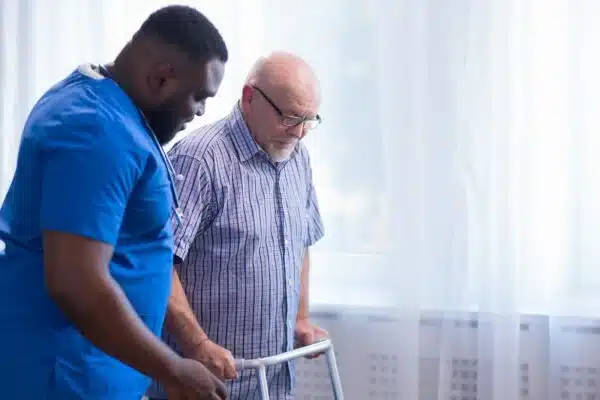
A hospital discharge can bring tremendous relief, but walking through the front door is often the beginning of another adjustment. Your parent may return home with a walker, oxygen equipment, a bedside commode, or another device prescribed by the medical team. Suddenly, familiar rooms may need to accommodate new equipment and new routines. Hospital to home care can provide valuable day-to-day support during this transition, helping a senior regain independence while families adjust to what life after hospitalization looks like. Grace at Home Care offers a Hospital-to-Home program focused on personalized attention and helping seniors regain independence and quality of life.
The House May Feel Different After Discharge
Before hospitalization, your parent may have moved through the home without thinking about it. Afterward, even familiar spaces can present new challenges.
A walker requires more clearance than walking independently. A senior who has lost strength may find the distance from the bedroom to the bathroom surprisingly tiring. Getting dressed, preparing breakfast, or simply standing up from a favorite chair may take considerably more effort.
New equipment can make those changes feel even more noticeable.
Families often spend so much time preparing for discharge that they do not fully consider what the first several days at home will involve. Once everyone arrives home, questions begin: Where should everything go? Can Mom safely reach the bathroom? Will Dad remember to use the device every time he stands?
Thinking through these issues before discharge whenever possible can make the return less stressful.
Understand What the Medical Team Has Ordered
Caregivers providing non-medical home care should not replace instructions from physicians, nurses, therapists, or medical equipment providers.
Before leaving the hospital, families should understand what equipment has been prescribed, how it should be used, and whom to contact with questions. If a family member is expected to perform a medical task, ask the appropriate healthcare professional to explain it before discharge.
It may help to have the following information available at home:
- Written discharge instructions and relevant contact information
- Instructions supplied with prescribed medical equipment
- The senior’s medication schedule and healthcare provider directions
- Dates and details for scheduled follow-up appointments
- Clear guidance about which symptoms or changes require a call to the healthcare team
Keep this information somewhere family members can find it quickly.
Make Room Before Your Loved One Arrives
Equipment can change how much space a senior needs to move safely.
A narrow path between furniture that was manageable before hospitalization may be difficult with a walker. Frequently used items may need to be placed within easier reach so a recovering senior does not repeatedly bend, stretch, or walk farther than necessary.
Think about the routes your loved one will use most often: bedroom to bathroom, bedroom to kitchen, and favorite chair to other commonly used areas.
The goal is not to redesign the house. It is to make everyday movement as straightforward as possible while your loved one adjusts to new abilities and equipment.
Expect Everyday Tasks to Take Longer
Recovery does not necessarily move at the pace families expect.
Your parent may be eager to return to a normal routine but tire after getting dressed. A shower may require more effort than anticipated. Even sitting upright for a meal can feel exhausting after a hospital stay.
That can be frustrating for someone accustomed to independence.
Hospital to home care can provide practical assistance with the daily activities surrounding recovery. The agency’s listed services include personal care assistance with bathing, dressing, grooming, and mobility, as well as senior home care that assists with daily tasks and safety monitoring.
Having help with these activities can allow a senior to conserve energy rather than spending it struggling through every task alone.
Equipment Is Only One Part of the Transition
Families understandably focus on visible changes such as a walker or another piece of equipment. Yet successful recovery at home also depends on the routines surrounding it.
A senior may need help getting ready in the morning, preparing for bed, or moving around the house. Companionship can also matter after hospitalization, particularly if the experience has left the individual feeling anxious about being alone.
The agency’s companion care service specifically provides emotional support and companionship with the goal of reducing loneliness and improving quality of life.
These non-medical forms of assistance can complement the instructions and treatment provided by the senior’s healthcare professionals.
Be Prepared for a Change in Confidence
A hospital stay can affect more than physical strength. It can change how a senior views their own abilities.
Someone who previously walked confidently through the house may suddenly hesitate before standing. A person who recently fell may worry that it will happen again. Another senior may resist using newly prescribed equipment because it makes them feel dependent.
Families can respond without turning every interaction into a warning.
Give your loved one time to adjust. Listen when they express frustration. Encourage them to follow the medical team’s instructions, but continue involving them in ordinary decisions about meals, clothing, activities, and daily schedules.
Needing assistance during recovery does not mean a senior has lost their voice.
Family Caregivers Need a Realistic Plan, Too
A discharge plan can look manageable on paper and become exhausting in practice.
An adult child may initially assume they can stop by before work, return at lunch, handle dinner, and stay late into the evening. That schedule may work briefly, but it can quickly become difficult alongside employment, children, household responsibilities, and the caregiver’s own need for sleep.
Before bringing your loved one home, talk honestly about who can provide assistance and when. Identify the gaps rather than assuming someone will always be available.
Grace at Home Care develops customized plans around individual circumstances and goals and adjusts those plans as needs evolve.
That adaptability can be particularly useful after hospitalization because the amount of assistance a senior needs may change as recovery progresses.
Know When a Concern Belongs with the Healthcare Team
Home caregivers can provide valuable assistance, but medical concerns should remain with qualified healthcare professionals.
If your loved one develops a new symptom, has difficulty with prescribed equipment, experiences an unexpected change in condition, or is unsure about medical instructions, contact the appropriate physician, nurse, therapist, or equipment provider.
This distinction protects the senior and helps everyone involved understand their role.
Home care can support the routines surrounding recovery; medical professionals direct medical treatment.
Give the New Routine Time to Become Familiar
The first few days home can feel awkward. Equipment is new, family members are learning what help is needed, and the senior may still be physically and emotionally recovering from hospitalization.
Gradually, routines often become easier to understand.
A walker finds a practical place near the chair. Family members learn which parts of the day require the most assistance. The senior becomes more familiar with the rhythm of being home again.
Hospital to home care can help provide consistency during that adjustment without taking over the recovery process. The objective is to give seniors the assistance they need while supporting the independence they are working to regain.
Grace at Home Care’s Hospital-to-Home program is designed around that transition, providing individualized attention as seniors return to familiar surroundings after hospitalization.
Coming home with medical equipment may initially make life feel more complicated. With clear medical instructions, a prepared home, realistic expectations, and dependable help with everyday needs, families can make the transition feel far more manageable—and give their loved one the time and support needed to settle safely back into life at home.
If you or an aging loved one are considering hospital to home care in Evergreen, CO please contact the caring staff at Grace At Home Care today! Denver Office: (720) 774-0856, Evergreen Office: (303) 489-5447
Grace At Home Care provides Personalized Senior Care in Denver, Arvada, Aurora, Littleton, Lakewood, Greenwood Village, Wheat Ridge, Centennial, Evergreen, Conifer, Golden, Morrison, Bailey and surrounding areas in Colorado.

Lin is also a skilled Dementia Practitioner, able to develop and implement engaging activities for clients with Alzheimer’s, Dementia, and cognitive disorders. Lin’s true passion lies in bringing greater meaning and quality of life to all her clients and their families. She serves as a dedicated advocate, providing much-needed physical and emotional support to help her clients achieve the highest quality of life possible.
- When a Sudden Health Crisis Changes Everything: What Families Should Do First - October 5, 2026
- Returning Home with New Medical Equipment: What Families Should Expect - September 16, 2026
- Thoughtful Environments: The Impact of Specialized Spaces in Memory Care - September 2, 2026